
Cheyenne sits at about 6,086 feet, gets roughly 15.9 inches of precipitation a year, and spends much of the year in dry air. That climate is easy on a lot of things, but it changes how ceiling work behaves. Water evaporates faster, joint compound dries faster, and fresh paint can flash before you have time to roll it out. None of this makes good ceiling work impossible. It just rewards crews who adjust their pace and methods. Here's what generally changes, and what it means for your project.
Most drywall and paint products dry by losing water to the air. The drier and warmer the air, and the more it moves, the faster that happens. Cheyenne's semi-arid climate means low relative humidity most of the year, and our often windy days add air movement when windows are open. Inside, winter heating dries the air even more.
Altitude plays a smaller, indirect role. The main effects people notice at our elevation come from the dry air and strong sun rather than from the elevation itself. We avoid making bigger claims than that.
Wetting popcorn texture in dry air
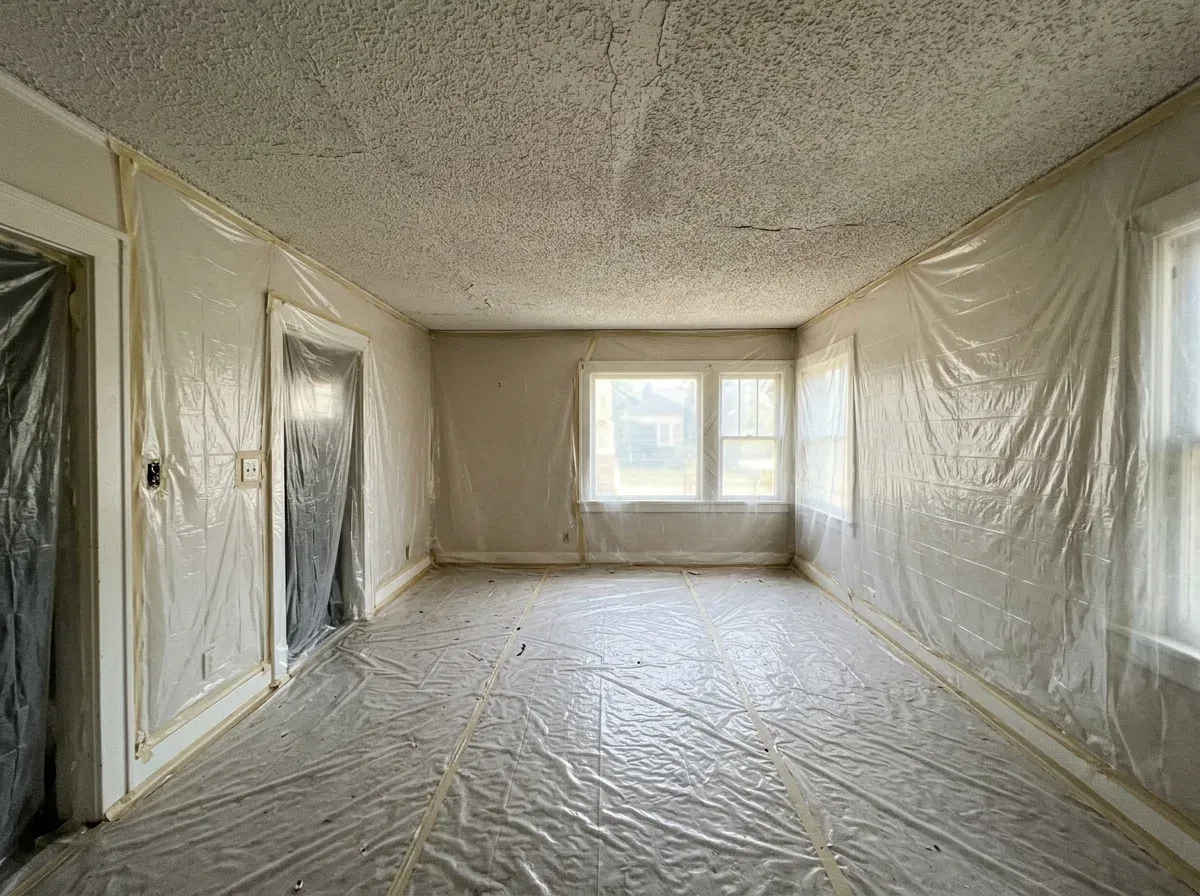
Unpainted popcorn texture is removed by misting it with water so it softens, then scraping. In humid places, a sprayed section can stay workable for a while. Here, the surface can start drying back out within minutes, especially in a warm room or one with air moving through it.
What tends to work better in dry conditions:
- Wetting smaller sections at a time, so the scraper keeps up with the sprayer.
- Misting a second time if the texture starts to firm up before it's scraped.
- Turning off forced-air heat or cooling and closing windows while scraping, so air isn't pulling moisture out of the texture.
- Using enough water to soften the texture without soaking the drywall paper, which can blister or tear if it gets saturated.
Before any wetting or scraping on a home built before 1986, a sample should be tested for asbestos. See our asbestos testing page for how we handle that.
Joint compound working time and skim coats
A smooth ceiling is built with thin coats of joint compound. Dry air shortens the time compound stays workable on the ceiling and in the pan. In general terms:
- Drying-type (premixed) compound hardens as water evaporates, so it tends to dry noticeably faster in low humidity. That's helpful for turnaround between coats, but the leading edge can start to stiffen while you're still feathering it out.
- Setting-type compound hardens by a chemical reaction, with a working time printed on the bag. Dry air affects it less, but the surface can still skin over sooner, and it is harder to sand.
The practical answer is to work in thinner passes and smaller areas, keep tools and pans clean so dried bits don't drag lines through the coat, and keep a steady pace. In short, skim coats in Cheyenne go best with a crew that works quickly and in thin passes. Our smooth ceiling finish page explains the full process.
Cracking and shrinkage
Joint compound shrinks as it dries. When a thick coat dries very fast on the surface while the inside is still wet, it can be more prone to shrinkage cracks. Fast drying is common in dry rooms with heat running or fans pointed at the ceiling.
General ways to reduce that risk:
- Apply several thin coats rather than one heavy one.
- Fill deep gouges or tears in stages, letting each fill dry before the next.
- Avoid aiming fans, space heaters or heat registers straight at fresh compound.
- Let each coat dry fully before sanding or recoating, even if the surface feels dry early.
Primer and paint in low humidity
Fresh joint compound is porous and should be primed before paint, otherwise the finish can look blotchy. In dry air, both primer and paint can dry faster on the roller and on the ceiling. The usual result is lap marks: visible stripes where a fresh pass overlaps paint that has already started to set.
Painters manage this by keeping a wet edge, working in manageable sections across the short dimension of the room, loading the roller well, and not stopping mid-ceiling. Some paint lines offer extenders or slower-drying formulas; whether to use them depends on the product. Our ceiling painting page covers how we approach a finish coat.
Winter heating dryness
Cheyenne winters are cold, and forced-air heat pulls indoor humidity down further. That affects ceiling work in a few ways:
- Compound, primer and paint dry even faster, so the thin-pass approach matters more.
- Most products list a minimum room and surface temperature on the label. The house needs to stay warm enough during the work and while coatings dry, rather than being set back overnight.
- Heat registers blowing directly at the ceiling can create uneven drying. Partly closing or redirecting them during the work can help.
Winter is still a fine time for ceiling projects indoors. It just takes planning around heat and airflow.
Hail season, roof leaks and ceiling stains
The Cheyenne area sees frequent severe hail in late spring and summer, and damaged roofs often lead to leaks that show up as ceiling stains, bubbling paint or sagging texture. Before any ceiling repair:
Fix the roof first
A ceiling repair over an active leak won't last. Get the roof or flashing repaired before interior work.
Let the drywall dry out
Our dry air helps here, but wet drywall and insulation still need time. Soft, sagging or crumbling drywall should be cut out and replaced.
Seal the stain
Water stains tend to bleed through ordinary paint. A stain-blocking primer is the usual fix before patching and painting.
Patch and blend
Then the area is patched, textured or skimmed to match, and painted.
Our ceiling repair page has more on water damage and cracks.
What this means for your project
None of these climate factors change the price ranges on our cost page. They're part of how the work is done here. If you're curious how they affect schedule, read how long popcorn ceiling removal takes. If you're weighing a DIY attempt, DIY vs professional removal covers where people tend to get stuck.
When you're ready, request a free quote. We usually reply the same day with a written estimate.
Frequently asked questions
Does Cheyenne's dry climate make skim coating harder?
It changes the pace more than the difficulty. Low humidity makes joint compound dry faster on the ceiling and in the pan, so the edge you're feathering can stiffen sooner. Working in thin passes and smaller sections, keeping tools clean and controlling airflow generally solve it. Faster drying can also shorten the wait between coats.
Why does my ceiling paint show lap marks?
Lap marks usually happen when a fresh roller pass overlaps paint that has already started to dry. Dry indoor air, especially with the heat running, speeds that up. Keeping a wet edge, working across the short dimension of the room, loading the roller well and finishing the whole ceiling without stopping usually help. Product drying times vary, so check the label.
Can popcorn ceiling removal be done in winter in Cheyenne?
Yes. Indoor ceiling work is common in winter. The house needs to stay within the temperature range printed on the compound, primer and paint labels during the work and while coatings dry, rather than being turned down overnight. Forced-air heat dries the air further, so registers may be redirected and work done in thinner coats.