
Popcorn texture is usually one of the easier things to take off a ceiling. A little water softens it, a wide blade lifts it, and the drywall underneath is ready for a skim coat. That changes the moment someone has rolled paint over it. If your Cheyenne home has a popcorn ceiling that was painted at some point, and many have been painted more than once, removal is still possible. It just takes more work, and it is worth understanding why before you pick an approach.
Why paint makes popcorn removal harder
Unpainted acoustic texture is mostly a soft, porous material held together with a binder that loosens when it gets wet. Water soaks in within a few minutes and the texture lets go of the drywall paper with light pressure. That is why straightforward scraping goes fairly quickly.
Paint, especially latex or oil-based ceiling paint, seals the surface. Water beads up or sits on top instead of soaking in, so the texture underneath stays hard. Scraping dry popcorn takes more force, creates more dust, and is more likely to gouge or tear the paper face of the drywall. Torn paper has to be sealed and patched before a skim coat, which adds labor. Several coats of paint over the years make all of this worse.
How to tell if your popcorn ceiling is painted
Sometimes it is obvious: the texture has a sheen, a color other than flat white, or a crust of paint you can see along the edges where the ceiling meets the wall. Often it is not obvious, because a coat of flat white ceiling paint looks a lot like the original texture.
Once you know the texture is safe to disturb, a simple water test tells you most of what you need:
Pick a hidden spot
A closet ceiling or a corner works well. Put down a drop cloth.
Mist the texture
Spray a patch about one foot square with plain water from a spray bottle. Don't soak it.
Wait 10 to 15 minutes
Watch whether the water darkens the texture and disappears, or beads up and sits on the surface.
Try a putty knife
If the texture scrapes off easily as a damp paste, it is most likely unpainted. If it stays hard, flakes in dry chips, or the water never soaked in, it is most likely painted.
If you're not sure, send us a few photos when you request a quote. A close-up taken at an angle with a flashlight usually shows whether there's a paint film on top.
Option 1: Scrape it anyway, with extra effort
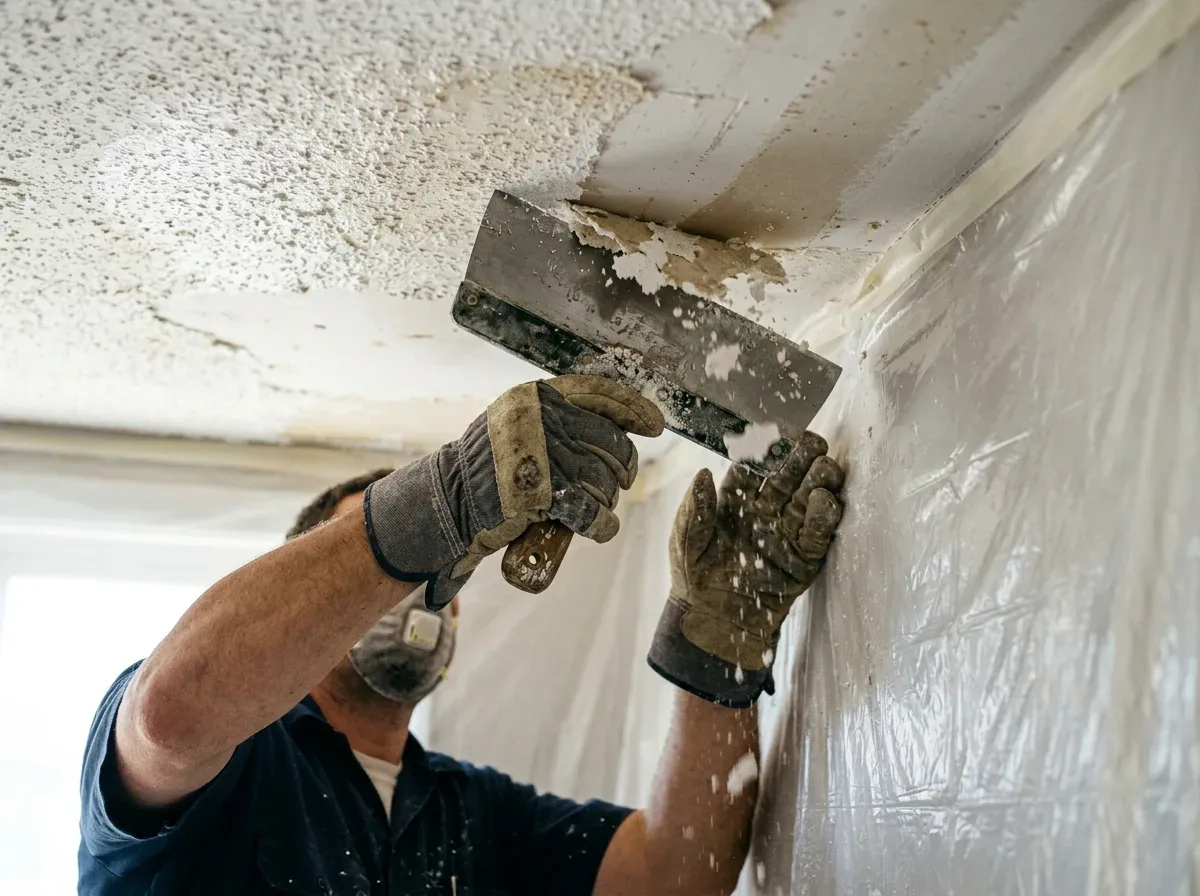
Most painted popcorn ceilings can still be removed. The crew scores or lightly sands the paint film so water can get in, wets the texture in small sections, waits longer between wetting and scraping, and repeats as needed. Some areas come off in sheets; stubborn spots get scraped dry with sharp blades held at a low angle to protect the drywall paper.
After scraping, any torn paper is sealed with a primer made for that purpose, then the ceiling gets skim coated and sanded so it reads smooth under light. This option gives you a true flat ceiling at roughly the original height, and it is usually what we recommend when the texture has only one or two coats of paint and the drywall is in decent shape.
Option 2: Skim coat over the painted texture
When the texture is well attached and the paint is thick, it can make sense to leave most of it in place. The high points are knocked down, a bonding primer goes on, and the ceiling is built up with several thin coats of joint compound until it is flat.
This avoids much of the scraping, but it adds weight and thickness, and it depends on the old texture staying firmly attached. If any of the popcorn is loose, flaking, or water damaged, those areas need to come off first. It is a judgment call that should be made after someone has looked at the ceiling in person. See our smooth ceiling finish page for how the skim and prime work is done.
Option 3: Cover it with 1/4" drywall
The third route is to leave the texture alone and screw thin 1/4-inch drywall sheets through it into the ceiling joists, then tape, finish and paint the new surface. This is the most common answer when the ceiling is heavily painted, cracked, sagging in spots, or when an asbestos test came back positive and the homeowner prefers to enclose rather than remove the material.
Things to weigh with this option:
- It lowers the ceiling slightly and adds weight, so joist spacing and attachment matter.
- Light fixtures, smoke detectors and vents need box extenders or adjustments.
- Crown molding and the wall-to-ceiling corner need to be finished cleanly.
- If asbestos is present, covering it is a decision to make with a qualified inspector; it does not remove the material, and drilling into it still disturbs it.
Overlay work is priced by quote after we see the room, since it depends on ceiling layout and fixtures.
What painted popcorn removal costs
Our pricing starts from the same packages as any other ceiling. If the texture is painted, we add about 25% to cover the extra wetting, scraping time and paper repair. These are typical ranges, not a quote:
| Package | Unpainted (per sq ft) | Painted, +25% (per sq ft) |
|---|---|---|
| Scrape & prep | $1.50–$2.75 | about $1.88–$3.44 |
| Scrape + skim coat + prime | $3.00–$4.75 | about $3.75–$5.94 |
| Turnkey: scrape + skim + prime + paint | $3.75–$5.75 | about $4.69–$7.19 |
| Scrape + knockdown or orange-peel texture | $3.00–$4.75 | about $3.75–$5.94 |
For example, a 12×12 bedroom (144 sq ft) taken to a smooth, primed finish typically runs about $430–$685 when the texture is unpainted. With painted popcorn, the same room estimate moves to roughly $540–$855. Ceilings over 9 feet add about 15%, vaulted ceilings about 30%, and many small single-room projects have a minimum charge. Asbestos lab testing starts at about $250.
The full breakdown, including whole-house examples, is on our popcorn ceiling removal cost page.
Which option makes sense for your ceiling
As a rough guide: one coat of paint and sound drywall usually means scraping is the cleanest result. Thick paint over firmly attached texture may favor a skim-over. Heavy damage, multiple paint layers, or a positive asbestos result often point toward a drywall overlay or a properly trained abatement contractor. The right answer depends on what we find when we look closely, which is why we give written quotes after seeing the ceiling or good photos of it.
If you're also weighing doing it yourself, read DIY vs professional popcorn removal first. Painted texture is where most DIY projects stall. And if you're unsure whether to go smooth or re-texture after removal, our smooth vs knockdown comparison covers the trade-offs.
When you're ready, request a free quote and include a photo or two. We usually reply the same day.
Frequently asked questions
Can you remove a popcorn ceiling that has been painted?
Yes, in most cases. Painted texture resists water, so it has to be scored or sanded, wetted in smaller sections and scraped more carefully to protect the drywall paper. It takes longer than unpainted texture, which is why our typical pricing adds about 25%. Heavily painted or damaged ceilings are sometimes better skimmed over or covered with 1/4-inch drywall instead.
How do I know if my popcorn ceiling is painted?
Mist a small hidden area with water, wait 10 to 15 minutes and try a putty knife. Unpainted texture darkens and scrapes off as a damp paste. Painted texture stays hard, beads water or flakes in dry chips. If the home was built before 1986, have a sample tested for asbestos before you scrape any test patch.
Is it cheaper to cover a painted popcorn ceiling with drywall?
Not always. A 1/4-inch drywall overlay skips the scraping but adds material, fastening, taping, finishing and fixture adjustments. On some ceilings it costs about the same as scraping and skimming; on heavily painted or damaged ceilings it can be the more practical choice. We price overlay work by quote after seeing the room or clear photos.